Workplace Health and Safety
For many business owners, “safety” can feel like a checklist of obstacles. It can mean costly equipment, endless paperwork and slower production. It is easy to view safety regulations as red tape that gets in the way of real work.
However, the most successful organizations view safety differently. They understand that a robust safety program is not a cost center it is a profit protection strategy. According to OSHA, businesses can save $4 to $6 for every $1 invested in safety programs. These savings come from reduced insurance premiums, avoided regulatory fines, and the elimination of indirect costs like training replacement workers or investigating accidents.
The Walmsley Perspective
At Walmsley Safety, we know that compliance is the floor, not the ceiling. To truly protect your workforce and your bottom line, you need to move from reactive fixes to proactive management. Here are five actionable workplace health and safety tips designed to modernize your operations and reduce your liability.
1. Build a "Safety First" Culture from the Top Down
The strongest indicator of a workplace incident isn’t the condition of your equipment. It’s the caliber of leadership. You can buy top PPE, but it is pointless if the Operations Manager walks the warehouse without safety glasses.
Creating a genuine safety culture starts with visibility. When leadership demonstrates that safety is a core value equal to productivity and quality employees listen.
Actionable Strategy: Stop Work Authority
One of the most effective ways to empower your team is to implement "Stop Work Authority." This policy gives every employee, from the 20-year veteran to the new hire on day one, the authority to halt a production line or task if they perceive an immediate danger.
This sends a powerful message:
We care more about your life than this shipment deadline...
When employees trust that they won't be reprimanded for prioritizing safety, they become your most effective safety officers.
Do you want to create a safer workplace?
Discover the key actions required to strengthen workplace health and safety today through a free, one-on-one consultation with our CEO, Howard Walmsley. Click below to begin and get started now!
2. Master the Art of Proactive Hazard Identification
Too many businesses wait for an accident report to learn where their risks are. This is reactive safety, and it is usually too late. To prevent incidents, you must actively hunt for them.
Hazard identification should be a continuous process, not an annual event. We recommend establishing a monthly "Safety Walk-Around" committee. Crucially, this team should include non-safety personnel. A worker from the shipping department might spot an electrical hazard in the assembly area that the regular supervisor has walked past a thousand times and stopped noticing.
Expand Your Scope
When looking for hazards, look beyond the obvious tripping hazards or wet floors. In 2025, a comprehensive assessment must include:
- Ergonomics: Are workstations causing repetitive strain injuries?
- Environmental Factors: With rising temperatures, is your heat illness prevention plan adequate?
- Chemical Safety: Are your Safety Data Sheets (SDS) current for every chemical on-site?
Walmsley Safety specializes in third-party site audits that provide the "fresh eyes" needed to spot these subtle but costly risks.
Need a Stronger Safety Program? We Can Help.
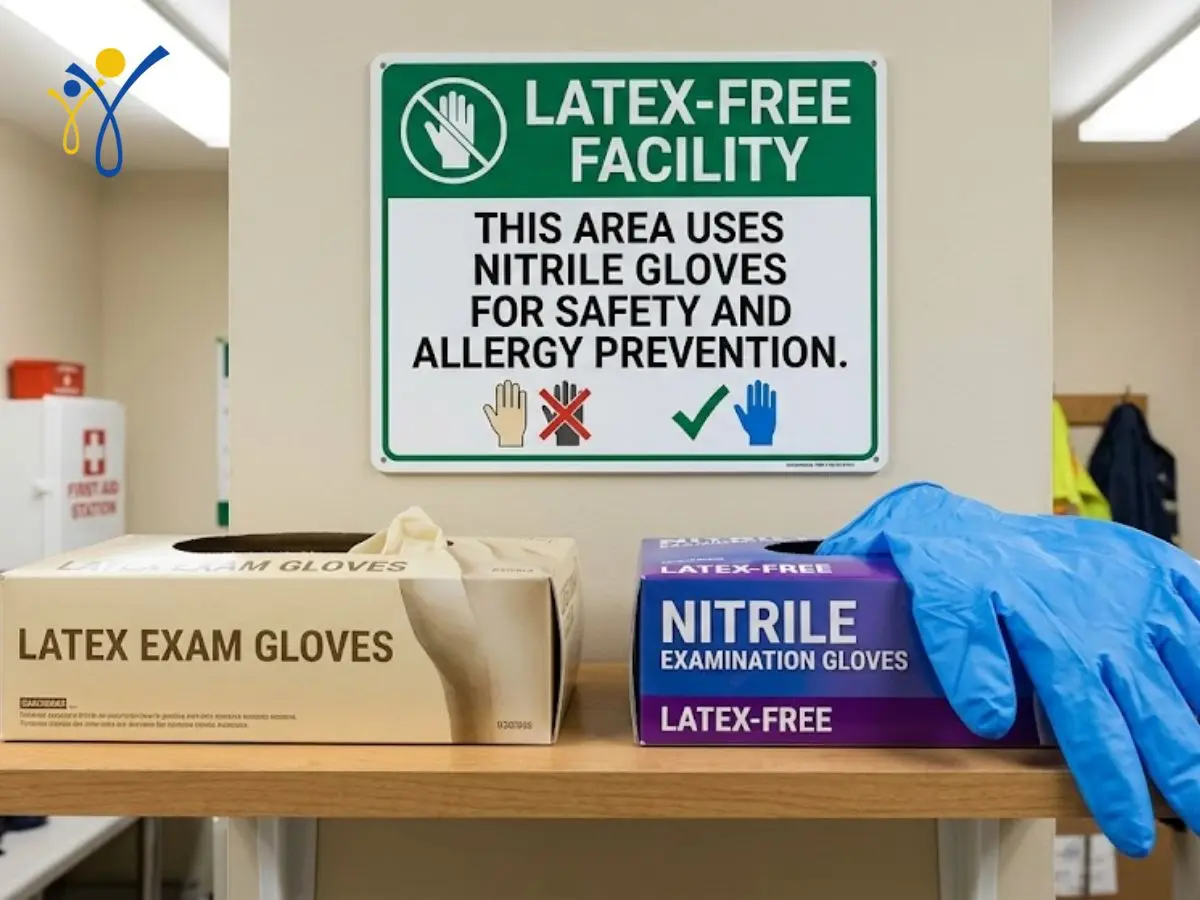
From HazCom training to exposure assessments, Walmsley Safety acts as your external safety department. If workplace allergies or chemical sensitizers are a concern, now is the time to tighten your compliance strategy. Click the button below to learn more about OSHA Compliance Training
3. Normalize and Celebrate "Near-Miss" Reporting
In the safety industry, we often refer to the "Heinrich Pyramid." This theory suggests that for every one major injury, there are roughly 29 minor injuries and 300 near-miss incidents.
A near-miss is a red flag. It is an accident that almost happened a pallet falling just inches from a worker, or a forklift skidding on an oil patch but recovering. If you ignore the 300 near-misses, the major injury becomes a statistical inevitability.
The "No-Fault" Rule
The challenge is getting employees to report them. If a worker fears a drug test, blame, or a write-up after reporting a close call, they may stay silent. That silence prevents you from spotting hazards early and fixing problems before someone gets hurt. To implement effective near-miss reporting, you need a clear, non-punitive system. It should build trust and encourage honesty. It should show that reporting is about prevention, not punishment.
Make it easy to report anonymous concerns and, more importantly, celebrate the reports.
"Thank you to John for reporting that loose railing on the mezzanine. Because he spoke up, we fixed it this morning before anyone fell."
This reinforces that reporting hazards is a positive contribution to the company, not "snitching."
4. Modernize Your Employee Safety Training
If your idea of safety training is sitting new hires in a breakroom to watch a VHS tape from 1995 and then signing a roster, your business is exposed. Passive learning has very low retention rates.
Effective employee safety training today needs to be engaging, frequent, and relevant.
The Power of Micro-Learning
Instead of one massive annual seminar that everyone sleeps through, implement "Toolbox Talks." These are 5-to-10-minute briefings held at the start of a shift or week. They focus on one specific topic relevant to that week's work for example, "ladder safety" or "hydration."
Hands-On Validation
Don't just tell them how to use safety gear; make them show you. Can they properly adjust their fall protection harness? Can they demonstrate the correct lifting technique? Documenting that an employee demonstrated competence is a much stronger defense against liability than a simple signature on a sign-in sheet.
5. Acknowledge the "Invisible" Hazards: Fatigue and Mental Health
The definition of workplace safety is expanding. While physical hazards remain critical, mental health in the workplace and worker fatigue are emerging as significant liabilities for B2B companies.
A worker who is chronically sleep-deprived or struggling with severe stress has a reaction time similar to someone who is intoxicated. In high-risk environments like construction or manufacturing, distraction can be deadly.
Monitor the Workload
Review your overtime and shift policies. Are you incentivizing employees to work double shifts to the point of exhaustion? Are your deadlines realistic? Walmsley Safety helps organizations review their administrative controls to ensure that operational pressure isn't inadvertently encouraging unsafe behavior. By acknowledging these invisible factors, you build a workforce that is not only safer but more loyal and productive.
Consistency is the Key to Safety
Implementing these workplace health and safety tips is not a one-time project; it is an operational lifestyle. A safety manual that sits on a shelf gathering dust offers no protection when an OSHA inspector walks through the door or worse, when an accident occurs.
Safety requires constant gardening. It requires a partner who can help you navigate the changing landscape of regulations and best practices.
Is your safety program ready for a check-up? Walmsley Safety acts as your external safety department. We invite you to contact us. We will review your current written programs, walk your site, and identify exactly where your vulnerabilities lie before they turn into liabilities.
Don't wait for the warning sign. Contact Walmsley Safety today.