
Build a Life-Saving Plan in California
In many California small to medium-sized businesses, you'll find an Emergency Action Plan (EAP) binder gathering dust on a manager's shelf. Far from a tailored safety document, it is often a generic, downloaded template that fails to address the facility's unique operational realities. This reliance on a boilerplate strategy creates a perilous illusion: it acts as a bureaucratic pacifier, providing leadership with a false sense of compliance while leaving the workforce highly exposed to site-specific catastrophes.
When constructing a compliant Cal/OSHA safety framework, precision is paramount. A legally compliant emergency action plan must consider all potential natural or man-made emergencies that could disrupt your workplace. It mandates designated evacuation routes, a clear chain of command, methods for accounting for all personnel, and customized protocols tailored to the unique architectural and operational hazards of your specific facility.
Genuine safety cannot be downloaded from the internet. It must be carefully architected. This publication will deconstruct why generic templates fail under the rigorous scrutiny of state auditors and provide a comprehensive framework to safeguard your workforce.
The Topography of California Risk
The risk landscape in California is uniquely volatile and completely unforgiving to generalized safety documentation. An emergency strategy drafted for a distribution center in Ohio is fundamentally inadequate for a manufacturing plant in Los Angeles. California businesses face distinct geographical and environmental exigencies. We must contend with seismic events, encroaching wildfires, and rolling power outages.
Furthermore, the regulatory rigor in this state is exceptional. During an inspection or a post-incident investigation, a Cal/OSHA auditor will immediately recognize an unadapted template. Relying on a generic document demonstrates a profound lack of operational awareness. If an institution operates without a comprehensive and customized plan, that institution can be found negligent in cases of catastrophic injuries.
The Anatomy of Failure: How Generic Templates Endanger Workforces
There are three fundamental ways that boilerplate templates endanger your workforce and expose your executive team to liability.
- First, they suffer from a dangerous void of site-specificity. Management must conduct a hazard assessment of the workplace to identify any physical or chemical hazards that may exist and could cause an emergency. Generic plans fail to account for the unique architectural idiosyncrasies of a facility, such as blind corners in a warehouse, specific chemical storage locations, or complex multi-story evacuation routes.
- Second, these templates can create an unclear chain of command. Best practice is to name one person to lead and coordinate your emergency plan and evacuation. Generic documents may simply say “a manager” will oversee the evacuation. A life-saving plan identifies exactly which manager is in charge and names a backup in case the primary coordinator can’t act. Employees must know who the coordinator is and trust that this person has the authority to make decisions during an emergency.
- Third, generic documents consistently ignore medical realities. Most small employers lack a formal internal medical program; they typically arrange with nearby medical clinics or facilities to handle emergencies and provide first-aid services to their employees. Templates rarely outline these vital local partnerships or account for the precise locations of specialized first-aid trauma kits within the building.
The Ultimate OSHA EAP Checklist
To transcend the limitations of generic documents, leadership must implement a rigorous structural evaluation of its facilities. Utilize the following EAP checklist to architect a genuinely resilient and highly operational framework.
Phase 1: Pre-Evacuation Architecture
- Establish designated exit route assignments and map them comprehensively. Most employers create maps from floor diagrams with arrows that designate the exit route assignments.
- Ensure exit routes are clearly marked, well-lit, wide enough to accommodate the number of evacuating personnel, and unobstructed at all times.
- Identify emergency communications systems, such as a public address system, for broadcasting vital emergency information to all employees.
- Make sure alarms are distinctive and recognized by all employees as a signal to evacuate the work area or perform other actions identified in your plan. Ideally, alarms will be able to be heard, seen, or otherwise perceived by everyone in the workplace, including those who may be blind or deaf.
- You may want to include in your plan locations where utilities can be shut down for all or part of the facility. Ensure all individuals remaining behind to shut down critical systems or utilities are capable of recognizing when to abandon the operation or task and evacuate themselves.
Phase 2: The Evacuation Protocol
- Implement a clear incident command structure defined with primary and backup contacts.
- Address procedures for assisting people during evacuations, particularly those with disabilities or who do not speak English.
- Designate individuals as evacuation wardens to help move employees from danger to safe areas during an emergency. Generally, one warden for every 20 employees should be adequate.
- The plan should identify the different types of situations that will require an evacuation of the workplace, as the extent of evacuation may differ for various hazards like fires or earthquakes.
- Determine medical logistics. Treatment of a serious injury should begin within 3 to 4 minutes of the accident. If an infirmary, clinic, or hospital is not close to your workplace, ensure that on-site personnel have adequate training in first aid.
Phase 3: Post-Evacuation Accountability
- Identify one or more assembly areas where employees will gather and establish a method for accounting for all employees.
- To ensure the fastest and most accurate accounting of your employees, consider taking a head count after the evacuation.
- The names and last known locations of anyone not accounted for should be passed on to the official in charge.
- Identify how or where personal information on employees can be obtained in an emergency, including next of kin and medical data.
- Address how visitors will be assisted in evacuation and accounted for.
Need a Stronger Safety Program? We Can Help.
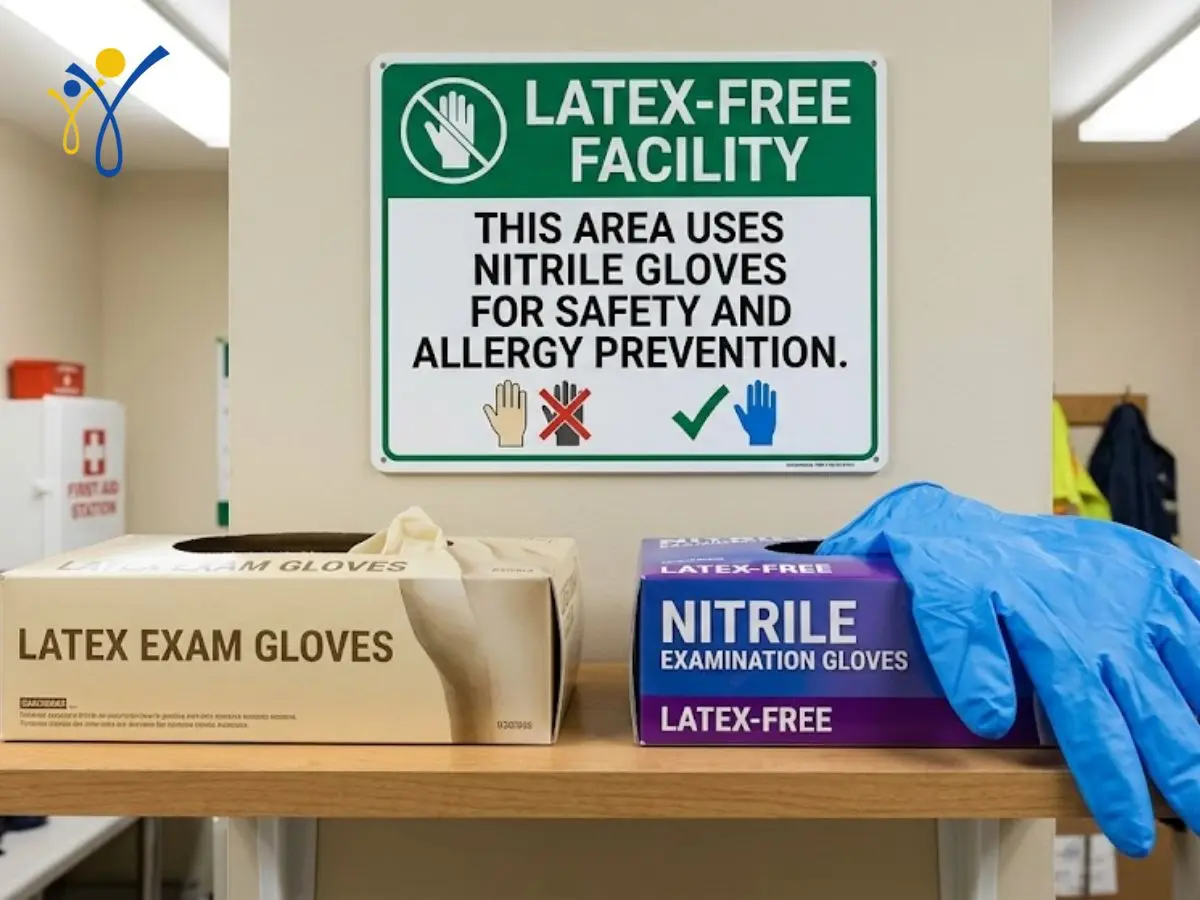
From HazCom training to exposure assessments, Walmsley Safety acts as your external safety department. If workplace allergies or chemical sensitizers are a concern, now is the time to tighten your compliance strategy. Click the button below to learn more about OSHA Compliance Training
From Bureaucracy to Culture: The Imperative of the Drill
An emergency action plan is purely theoretical literature until it is tested through empirical practice. To foster a genuine safety culture, management must prioritize rigorous, ongoing education. Training should be offered to employees when you develop your initial plan and when new employees are hired. Furthermore, employees should be retrained when your plan changes due to a change in the layout or design of the facility, or when new types of hazards are introduced that require special actions.
Theoretical knowledge must be augmented by physical repetition. Once you have reviewed your plan with your employees and everyone has had the proper training, it is a good idea to hold practice drills as often as necessary to keep employees prepared. Business leaders must view these drills not as interruptions to productivity, but as vital diagnostic tools. After each drill, gather management and employees to evaluate the effectiveness of the exercise. Identify the strengths and weaknesses of your plan and work to improve it continuously.
Here are some common hazards to watch for:
Architecting Resiliency with Walmsley Safety
Protecting human life is a profound operational responsibility that absolutely cannot be delegated to a generic internet download. Navigating complex safety regulations is a daunting endeavor for any executive team striving to run a profitable enterprise. However, neglecting this fundamental structural responsibility invites devastating legal liabilities and unthinkable moral consequences.
Do not wait for an auditor's citation or a catastrophic tragedy to expose the hidden fractures in your safety protocol. Contact Walmsley Safety Consulting today for a comprehensive, site-specific audit. Let us step in as your outsourced safety architects to build a resilient plan that does not merely satisfy state bureaucracy but actively preserves human life.