
A Guide to Compliance
When most people hear the word "allergy," they picture seasonal pollen, a few sniffles, and over-the-counter antihistamines. However, in an industrial, manufacturing, or healthcare setting, this perception is dangerously incomplete.
For business owners and operations managers, severe allergies in the workplace are not just personal health inconveniences—they are significant compliance liabilities. Severe reactions to workplace materials can lead to decreased productivity, expensive workers' compensation claims, and intense regulatory scrutiny.
Managing OSHA workplace allergies requires walking a delicate tightrope between workplace safety regulations and human resources law. At Walmsley Safety, we help businesses identify hidden hazards and build the comprehensive programs needed to keep your workforce safe and your company legally compliant.
The OSHA Perspective
When discussing safety compliance, the first question employers ask is, "Is there a specific rule for this?" While there is no single standard specifically dedicated to allergies, OSHA regulations still apply heavily to workplace exposures.
The General Duty Clause and HazCom
The Occupational Safety and Health Administration (OSHA) governs these situations primarily through two avenues:
- The General Duty Clause: Under Section 5(a)(1) of the OSH Act, employers are mandated to provide a workplace "free from recognized hazards that are causing or are likely to cause death or serious physical harm." If a substance in your facility is a known sensitizer and causes severe allergic reactions, it qualifies as a recognized hazard.
- Hazard Communication (HazCom): The HazCom standard requires employers to inform and train workers about the hazardous chemicals they are exposed to. This includes maintaining up-to-date Safety Data Sheets (SDS). If a chemical is known to cause respiratory sensitization or severe skin allergies over time, workers must be trained on the risks and how to protect themselves.
Ignorance of the chemicals inside your building is not a viable legal defense when an employee suffers a severe reaction. Adhering to OSHA standards means proactively understanding your inventory.
The HR Crossover
Addressing allergens in the workplace isn't solely a safety department issue; it frequently crosses over into human resources and employment law.
When an Allergy Becomes a Disability
When a worker's allergy is severe enough to substantially limit a major life activity (such as breathing or working), it may be legally protected under the Americans with Disabilities Act (ADA). This shifts the conversation from general workplace safety to individualized accommodation.
Once an employer is notified of a severe allergy, the Disabilities Act (ADA) requires them to engage in an "interactive process" with the employee to find a reasonable accommodation. This might involve transferring the employee to a different department, altering their specific duties, or providing specialized personal protective equipment. Employers are required to provide these accommodations unless doing so would cause an undue hardship on the business operations—a legal threshold that is often difficult to prove.
Safety vs. HR: > The safety department dictates how you handle and store hazardous material to protect the general workforce. Human Resources dictates how you accommodate a specific affected employee under the law.
Note: While Walmsley Safety handles the physical safety, exposure controls, and OSHA compliance, employers should always consult legal counsel for specific ADA and HR disputes.
Need a Stronger Safety Program? We Can Help.
From HazCom training to exposure assessments, Walmsley Safety acts as your external safety department. If workplace allergies or chemical sensitizers are a concern, now is the time to tighten your compliance strategy. Click the button below to learn more about OSHA Compliance Training
Common Culprits: Identifying Workplace Allergens
To protect your team, you first need to know what to look for. Allergy symptoms in an occupational setting can range from mild contact dermatitis (skin rashes and hives) to life-threatening occupational asthma or anaphylaxis.
Here are some common hazards to watch for:
Industrial Chemicals & Solvents:
Epoxies, resins, cleaning agents, and metalworking fluids are notorious skin and respiratory sensitizers.
Biological Hazards:
Mold circulating in poorly maintained HVAC systems, or animal dander in veterinary and agricultural settings, can trigger severe asthma.
The Classic Example:
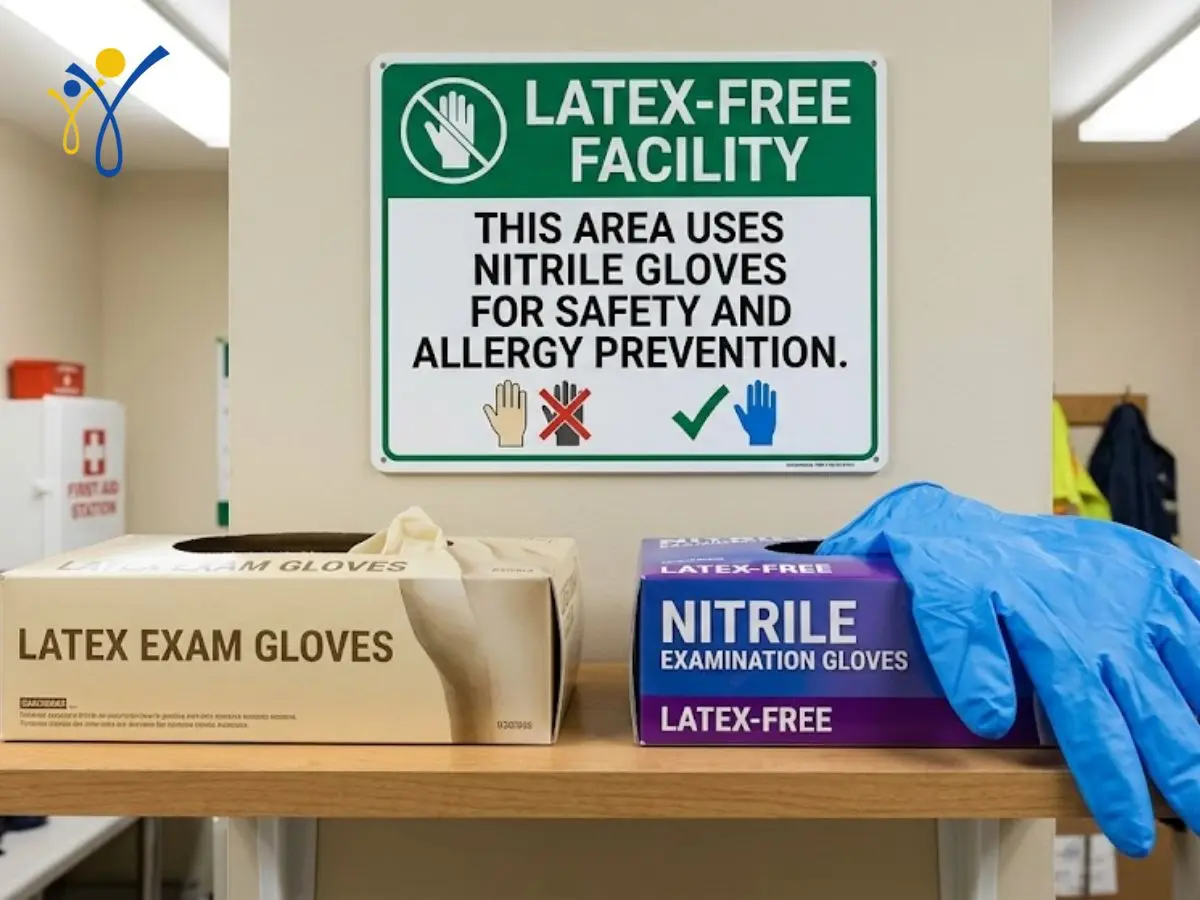
The latex allergy is perhaps the most famous occupational allergy. Decades ago, the healthcare and sanitation industries had to drastically pivot away from powdered latex gloves due to severe, systemic reactions developing among long-term staff.
Proactive Prevention: The Walmsley Approach
Reacting to an allergy only after an employee is rushed to the hospital is a failure of safety management. By following the guidance of the safety administration, OSHA, employers should apply the Hierarchy of Controls to mitigate these risks before they cause harm.
- Elimination and Substitution: The absolute best way to protect your workers is to remove the allergen entirely. For example, mandate a facility-wide switch from latex to nitrile gloves, or substitute a high-VOC solvent with a water-based alternative.
- Engineering Controls: If you cannot eliminate the allergen, you must isolate the people from the hazard. This involves installing proper local exhaust ventilation, dust collection systems, or HEPA filtration to keep airborne sensitizers out of the breathing zone.
- Administrative Controls & PPE: If exposure is unavoidable, change how people work. Rotate shifts to limit an individual's exposure time. Finally, provide appropriate, fit-tested personal protective equipment (PPE), such as respirators or specialized chemical-resistant suits.
Conclusion
Managing workplace allergies requires a proactive, documented approach to facility management, chemical hazard communication, and employee health. Treating an occupational allergy as a simple nuisance is a fast track to regulatory fines and litigation.
Protect Your People, Protect Your Business
Don't wait for a severe allergic reaction to discover a glaring gap in your safety program. At Walmsley Safety, we act as your external safety department, helping you navigate the complexities of hazard identification and regulatory compliance.